First Stop Health: The Benchmark Your App Is Quietly Measured Against
First Stop Health is a useful industry benchmark. The app holds a 4.9-star rating on Google Play, covers virtual urgent care, primary care, and mental health visits with a streamlined login experience, and serves employers nationwide. Some members report connecting with a licensed doctor in under five minutes for urgent care visits. Employers get quarterly reporting, utilization data, and care navigation built in. That is the exact standard your prospective users are quietly comparing your build against, whether they have heard of First Stop Health or not.
Most AI-assisted telehealth MVPs look remarkably solid in a founder demo. The problem surfaces the moment a real patient tries to log in under acute anxiety, a provider needs to pull up clinical visit notes, or the app serves 300 concurrent users for the first time. The gaps are not always obvious from the outside. They are buried in default database rules, unversioned consent flows, session handling that no one tested past the happy path, and cloud infrastructure that was never engineered to carry live clinical workloads.
At Launchieve, we review AI-built and no-code products before they go live. Healthcare apps reveal more hidden failure points than almost any other category we audit. This checklist is built from what actually breaks in production.
Why Telehealth MVPs Are Harder to Launch Than They Look
Patients who have used employer telemedicine benefits arrive with expectations already baked in. They expect sub-five-minute response times, a polished mobile experience, and 24/7 reliability. These are treated as fundamental table stakes in the virtual urgent care market, not luxury features. When your MVP delivers anything less, the drop-off is immediate and quiet. Patients do not submit bug reports. They simply leave and never return.
Tools like Lovable, Bolt.new, Cursor, and Replit are genuinely impressive for putting a functional prototype in front of investors or early beta testers. The core problem is that "working in a demo" and "ready for real patient clinical data" are two completely different bars. AI generators default to development-grade configurations: open database rules, zero rate limiting, placeholder auth callbacks, and verbose logging that captures far more sensitive telemetry than it should. A healthcare app that ships with those defaults is not just fragile—it is an active liability.
Healthcare is uniquely a category where trust is the product. Patients deciding whether to use a new virtual care app ask a split-second, unconscious question: is this legitimate, and is my data safe? Every technical glitch, delayed SMS, or clunky intake screen in your build answers that question in the wrong direction.
First Stop Health-Style Privacy Risks Hiding in Your Build
Many early-stage telehealth founders are not yet formally classified as covered entities under HIPAA, but they handle data patients treat as just as sensitive: appointment history, symptom descriptions, medication mentions, and mental health notes. Your privacy obligations are very real whether or not a specialized healthcare attorney has weighed in yet. Patients will not read your legal terms of service to decide if they trust you. They will judge your app by how it feels and how defensively it behaves.
Data minimization, encryption at rest and in transit, and clear consent flows signal that you take patient information seriously—not merely as compliance checkboxes, but as essential trust signals.
AI-generated code rarely handles consent flows at the database layer. A typical Lovable or Replit build will collect form inputs, insert them directly into a database, and navigate forward. What it will not do is log consent timestamps, version privacy policy acceptance, or segment which data points are accessible by role. In healthcare, these are not optional enhancements. They are the very first requirements an enterprise health plan buyer or compliance auditor demands. Build the audit trail from day one.
Authentication and Access Control Gaps That Create Real Liability
Session Expiration and Rate Limiting
AI coding tools generate authentication flows that function, but rarely ones that are hardened for clinical standards. Consider how much is left to insecure defaults: session expiration is often excessively long or entirely missing, and password reset endpoints frequently skip rate limiting altogether. Multi-factor authentication (MFA) is almost never included unless explicitly requested, and even then, edge cases like token invalidation on password change are overlooked. For a telehealth app where a compromised login exposes confidential doctor-patient conversations, these are critical vulnerabilities.
Role Separation and Access Control (RBAC)
There is also a severe structural flaw that surfaces in almost every AI-scaffolded healthcare MVP: patient and provider accounts are treated as one generic user entity with a simple boolean flag in the database. That approach creates massive authorization loopholes that are difficult to audit and trivially easy to exploit. Providers should never be able to inspect patient records outside their assigned clinical visits. Patients must never be able to inspect another patient's records through an unsecured API endpoint or direct object reference (IDOR).
Role-based access control needs to be designed into the schema and database policies (such as Supabase RLS) from the beginning. Retrofitting RBAC later requires auditing every single API route, database query, and permissions check. Doing it right from day one saves weeks of emergency refactoring.
Uptime, Scaling, and Infrastructure Pitfalls Unique to Telehealth
Replit, Bubble, and similar shared prototyping platforms work well for proof-of-concept demos. They are fundamentally unsuited for the demands of a live clinical environment. Shared compute, unpredictable cold-start delays, and lack of contractual SLAs make them high-risk. When a patient is anxiously waiting in a virtual waiting room for an urgent consultation, a 15-second cold start feels like a broken app.
Compliance is the second critical barrier: standard hosting on Replit or basic PaaS tiers does not include signed Business Associate Agreements (BAAs). If your application processes protected health information (PHI), hosting without a signed BAA immediately disqualifies you during enterprise due diligence.
Furthermore, most AI-built telehealth apps chain together multiple third-party APIs: WebRTC video providers, calendar scheduling, SMS notifications (Twilio), payment processors (Stripe), and EHR systems. Every single external API is a point of failure. If your video API hiccups during a visit, does your app recover or display a blank screen? Resilient healthcare architectures require explicit fallback states and defensive error handling.
First Stop Health-Style UX Patterns Patients Actually Respond To
First Stop Health's onboarding UX reflects a core behavioral insight: every unnecessary intake step costs you patients who abandon registration. In modern employer setups, employees can initiate care with virtually no friction, activating their session with just an employee ID or verified email. The guiding principle for any virtual care app: collect only what you need, exactly when you need it. Progressive intake inside the visit flow consistently outperforms a ten-field clinical form presented before the patient has even seen a doctor's profile.
The 5-Step Trust-Building Telehealth Onboarding Sequence:
1
Surface a Trust Signal FirstDisplay HIPAA encryption badges, licensed provider affiliations, or employer coverage before requesting input.
2
Ask for Minimal Info to StartRequest only email or phone and basic identity verification to open the initial account.
3
Explain Why Sensitive Data Is NeededWhen asking for symptoms or medications, clearly state how it assists the attending clinician.
4
Accelerate Time to Meaningful ActionPlace the patient into a virtual queue or connect with a provider in the minimum possible clicks.
5
Defer Non-Essential Data CollectionPostpone detailed insurance cards, pharmacy preferences, and secondary history until after the consultation.
Credibility signals move conversion: visible doctor credentials, plain-language privacy statements ("Your medical records are encrypted and never sold to third parties"), verified partner logos, and a clean interface all nudge the patient toward saying yes. These are high-impact conversion drivers, not superficial styling.
The Pre-Launch Checklist Before Any Real Patient Touches Your App
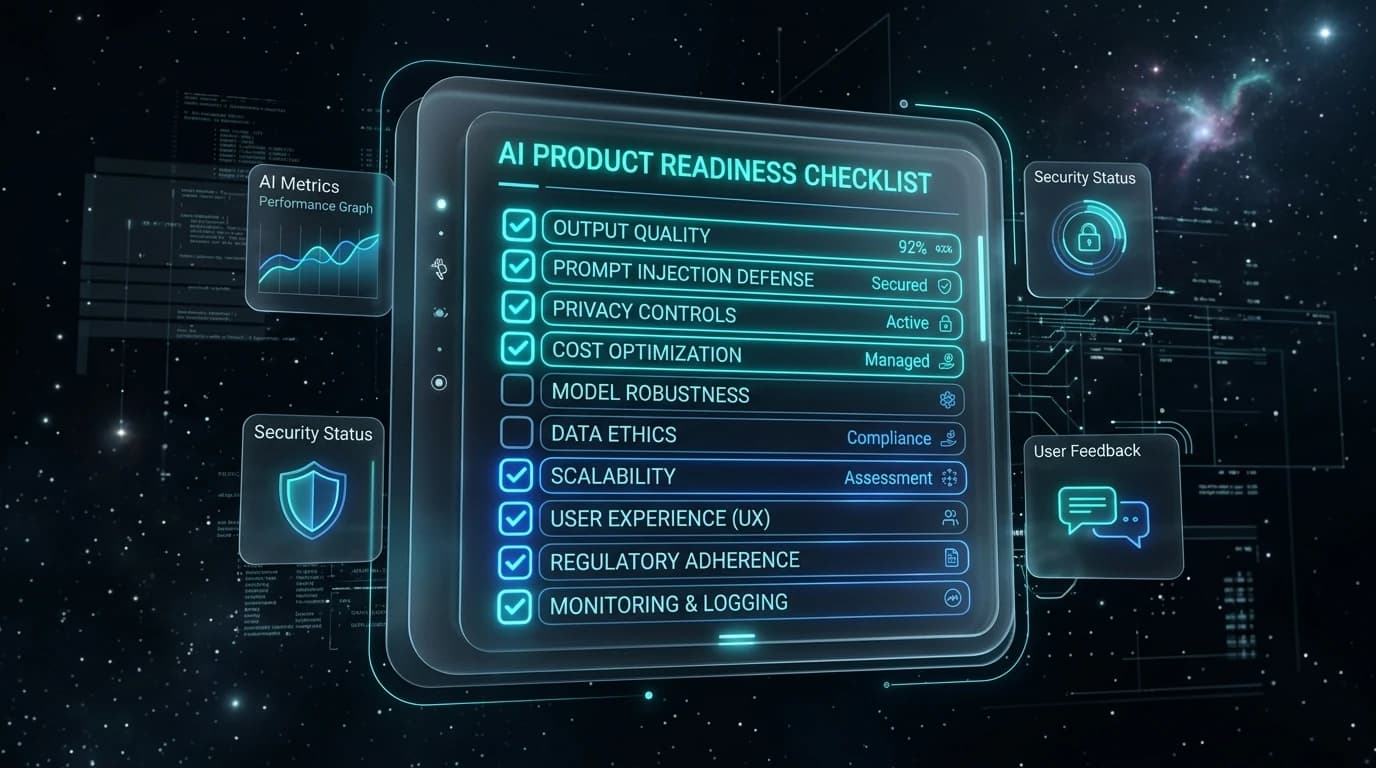
Run through each of these 10 items before you go live. Every point represents a vulnerability where AI-generated and prototype builds routinely fail under real patient traffic:
1
Data EncryptionEncryption at rest (AES-256) and in transit (TLS 1.3) confirmed across all databases, backups, and API endpoints.
2
Session Lifecycle & TimeoutsStrict session expiration configured and tested across mobile browsers, desktop, and native apps.
3
Role-Based Access Control (RBAC)Explicit boundary verification ensuring patients and providers cannot query unauthorized records.
4
Consent Versioning & TimestampsImmutable logging for terms acceptance, telehealth consent, and notice of privacy practices.
5
Third-Party API Graceful DegradationDefensive fallbacks for video conferencing, SMS gateways, scheduling tools, and payment APIs.
6
Concurrent Load TestingSimulated load testing against realistic concurrent spikes without database connection exhaustion.
7
Healthcare Legal ReviewPrivacy policy, informed consent, and service terms reviewed by a healthcare-specialized attorney.
8
Business Associate Agreements (BAAs)Signed BAAs executed with cloud hosting, database, email, SMS, and analytics vendors handling PHI.
9
Cross-Device Mobile ValidationNative app and responsive mobile web verified on iOS 15.5+ and current supported Android versions.
10
Non-Technical End-to-End TestFull patient registration and consultation completed by a non-technical tester without assistance.
Validate Your Build Before Real Patients Find the Flaws
If you built your telehealth MVP with AI tools and are not certain which of these safeguards are active, Launchieve's Free Launch Readiness Scan is a fast way to get immediate visibility into public security, SSL headers, and UX performance.
Founders preparing for enterprise sales or clinical onboarding can leverage Launchieve's Technical Launch Audit ($299), covering security architecture, database RLS, API resilience, and code quality with senior human auditors.
If patient onboarding conversion, messaging clarity, and trust signals need refinement alongside technical hardening, our paired GTM Launch Audit ($399) provides end-to-end launch optimization.
And if your AI-generated codebase has hit the limits of what automated prompts can maintain, Launchieve's Complete My App service transitions your prototype into a high-performance, compliant production stack.
Get the Launch Right, Not Just the Demo
Building a virtual care platform is one of the most ambitious products a founder can tackle with AI-assisted tools. User expectations are high, the trust bar is higher, and regulatory expectations sit well above general SaaS. None of that means you should hesitate to build—it simply means you must know what you are deploying before real patients rely on your product.
Platforms like First Stop Health earned their 4.9-star reputation because their product delivers consistently when real people experience acute healthcare needs. That is the standard to target, and it begins with an honest audit before launch rather than a crisis after.
Frequently Asked Questions
What makes First Stop Health a benchmark for telehealth app UX?
First Stop Health sets a standard with a 4.9-star rating on Google Play, sub-five-minute wait times for urgent care, progressive intake that avoids lengthy upfront forms, and seamless employer-benefit integrations. Patients unconsciously evaluate any new virtual care app against this frictionless experience.
Why do AI-assisted telehealth MVPs frequently fail when real patients arrive?
AI prototyping tools (Lovable, Bolt.new, Cursor, Replit) optimize for functional demos with mock data. They default to open database permissions, lack rate limiting, omit session timeouts, log sensitive data, and chain unvetted third-party APIs without graceful fallback states.
Can telehealth startups host production patient data on Replit or Bubble?
Standard hosting on platforms like Replit or Bubble is rarely sufficient for live clinical care because they do not sign Business Associate Agreements (BAAs) for standard plans, have cold-start latency, and lack enterprise uptime SLAs required for urgent telehealth consultations.
How should role-based access control (RBAC) be separated between patients and providers?
Patient and provider accounts must have strictly separated database schemas or hardened Row-Level Security (RLS) policies. Providers should only access patient records for assigned visits, and patients must never be able to query another patient's medical data through unsecured API routes.
What trust signals increase patient conversion during telehealth onboarding?
Visible provider credentials, plain-language privacy statements ('Your records are encrypted and never sold'), clear response-time commitments, partner or employer logos, and progressive intake that defers non-urgent questions until inside the care visit.
Make Your Telehealth App Launch-Ready in 4–5 Days
Don't wait for your first live patient consultation to reveal auth leaks or API failure states. Run a free instant scan or book a comprehensive Technical Launch Audit with Launchieve today.
L
Launchieve Technical Review Team
Technical Audit Engineers
We review AI-built codebases across security, infrastructure, APIs, and launch readiness. Our team has audited products built with Cursor, Lovable, Bolt.new, Replit, Supabase, Firebase, and mixed AI-assisted workflows. Every finding in this article comes from patterns observed in real technical reviews — not theoretical scenarios.